Tuesday, August 11, 2015

A Bad Hair Day Is Always Better Than a Bad Cancer Day

I'm not known as an impulsive person. I've been known to analyze and over-analyze things to infinity and beyond before making a decision. I rarely ever just "go with the flow". I like to know the lay of the land and what my options are before I commit to anything. I need to know that I can stay the course once I choose it. It makes me more than a little persnickety.
 
Some time ago, I was stunned when one of my cancer advocate friends found out that, not only had her cancer spread, it had gone big time into several organs. This beautiful, kind, sweet, talented, funny, and very smart lady was facing a battle that seemed overwhelming in its brutality. She was willing to go through procedures that would give the rest of us nightmares, just to have the chance to live longer.

It's been a hard road for her over the last couple of months. As painful as it is for me to witness, it's that much harder for her to endure. But she keeps looking for the beautiful in life, and because she does, she's been a great inspiration for me. I just wish that I could take away the pain and suffering she's experienced, the terror that chases her through the long, sleepless nights, the sorrow that fills her heart with tears.

When I found out that chemotherapy was robbing her of her beautiful long hair, I wanted to do something that would show her how much I support her through this grueling process. How could I show her that I care in a way that would be positive in a world filled with too many negatives?

I set my sights on donating my hair to a wig program. I checked out my options and finally decided on the Pantene Beautiful Lengths program. There were rules -- no dyed hair was allowed. And there couldn't be too many gray hairs because they don't absorb dye well when the wig is crafted. I had to have at least eight inches of hair to send in. I learned that it takes eight ponytails to make one wig. That means that seven other people have to donate their hair before a woman in need gets a human hair wig. Pantene Beautiful Lengths wig donation program

Why the Pantene Beautiful Lengths program? They have partnered with the American Cancer Society to provide free wigs to women over 18 who are in cancer treatment and can't afford to purchase one. Anyone who's been around cancer survivors knows how quickly the bills add up when treatment starts. Cancer often not only robs you of your chance to continue working during treatment, it takes what's left of your savings. The American Cancer Society has good information on local and national resource and support services available on its website, and that's where you'll find more on the free wig program.

I decided I could handle giving up my hair in a dear friend's honor. But what would I do when it was gone? I tried to picture myself with short hair. Would I wind up looking like Ringo Starr or Jamie Lee Curtis? I spent a couple of hours trying to imagine how it all would end. I found photos of celebrities with hair styles I liked, in hopes I would somehow develop a glamorous persona during this process. But time and time again, I kept coming back to the fact that my friend was losing her hair because of cancer. She was going bald because of her (hopefully) lifesaving treatment. That trumps everything. A bad hair day for me is always better than a bad cancer day for my friend.

I took the plunge. I found a Super Cuts in a busy location, thinking that I was more likely to get a hair stylist with experience. Sure enough, Jennifer had cut hair for other hair donors. Instead of one long ponytail, she created two pigtails, which kept more of my hair on my head than I expected.

It's been a few weeks since I went from long hair to short. If I had known how easy it would be to donate hair, I would have done this long ago. In fact, I probably would have made it an annual event. That's why I encourage you, if you are able, to donate in honor of someone you know who is going through cancer treatment.

As much as I worried about what would happen to me after my hair was cut, it was nothing compared to what's happened to my friend. Some days are good, some days are horrible. What she's been through has been far more challenging than I expected.

Sometimes my friend goes "bald", letting her hairless state speak for itself when she hangs out with people who make her feel comfortable about herself. She doesn't have to pretend with those of us who adore her. And sometimes, when she wants to forget about cancer, she dons a wig to go out in public. If you saw her at her favorite coffee bar, you would see a glamorous lady with a dazzling smile. For those few moments, she is back to being her old self, doing what she loves to do as a dedicated "foodie" with a camera, documenting her culinary adventures. I get to travel with her vicariously as she samples mouthwatering dishes that make me salivate every time. I treasure those times on her behalf, knowing how important it is to her that she embraces the life she still lives. But in every photo she shares, there is one thing I seek -- the light in her eyes. Is she finding some little smidgen of joy as she goes through her day? As much as the horrors of cancer and cancer treatment have piled up, is she still seeing the beauty in the sunset, still feeling the warmth of the sand on her bare feet, still touching the salt water as the waves roll into shore?

When it comes to cancer, it's important to be greedy about joy. We should clutch it tightly and refuse to give it up. Joy is that one thing we can share in abundance with those we love, but only as long as we make room for it in our souls. It's what puts a song in our hearts, a bounce in our step, and makes us still want to dance to a beautiful tune, even when our bodies are too weary to rise.

When push comes to shove, when cancer dominates a life, the only things that really matter are love and comfort. We love, so we offer comfort in any form we can -- whether it's practical advice, humor, strong shoulders that can handle the tears, or even just the chance to celebrate those too-few moments of joy that still creep into the room like a ray of sunshine on a gloomy day. When all the high tech tools of oncology and carefully concocted medicines no longer seem to push back the cancer to the corner, love and comfort are all we have left to share. We stand by those we love and we never surrender to this insidious disease. We don't care about the lack of hair on a head. We care about the beautiful person who is still here with us and we celebrate her beauty.

Tuesday, March 3, 2015

Michelle DID Win

Michelle DID win. As I join so many others in grieving the loss of this vivacious, determined, spirited young woman, that is uppermost in my mind. #LiveLikeMichelle....

She started out her life with cancer by blogging about what it was like to face such as horrible diagnosis. Wife, mother of young children, daughter, sister, and friend to so many, Michelle had no intention of allowing cancer to suck the joy out of life. She was going to beat this thing, come hell or high water. You know what? She did.

Too often we hear that people battled cancer and the cancer finally got the upper hand, resulting in death. Too often it sounds like they failed because they were weaker than the disease. The words "brave" and "courageous" can be found in obituaries in every newspaper around the globe. But battling cancer isn't what makes someone brave or courageous. Battling the demons that stop us from living with cancer is the real test of the soul. We wage war with an enemy that steals our humanity as it marches through the human body. Cancer is a weapon of mass destruction. It terrifies us all with its mighty power, especially when it's an aggressive, untreatable kind of cancer cell that invades. But that's not the foe we need to fight, first and foremost.

Cancer cells destroy -- that's true. In lucky times, the right mix of treatments and drugs sometimes halt cancer in its tracks. Then again, cancer can be sneaky. Those cells can hide in the body, only to resurface at the most inopportune times. We never know which way the cells will mutate, or where they might show up next, or whether there's a treatment that will be effective. That black cloud of uncertainty hangs heavy over the lives of cancer survivors and the people who love them. All that darkness can take its toll on the soul, drowning us in a sea of sorrow for what could have been, what might have been, what never was.

It's easy to hate cancer, to give in and give up when we first hear that horrible diagnosis, to surrender before we've even begun to understand the real enemy. When we allow our fear of cancer to decide how we live our lives, we give up our personal power, self-determination, and above all, our right to choose to live our lives out loud.

Michelle taught me much about personal courage and bravery. Right up to her last few days, she fought hard to remain the wonderful young woman we adored. That mattered to her, even in hospice care. Imagine feeling like you've let down the people who love you because you just don't have the strength, the energy, the power to rise above the cancer any more. You want to go on giving, but you're just too exhausted to do it.

Michelle DID win because she allowed us to join her on her journey through a war zone where cancer is a weapon of mass destruction. Every time she was knocked down, she stood up. Every time she lost her footing, she got to her knees and then to her feet, dusted herself off, and continued on. Cancer never took that brave, courageous spirit from her. As the power of those destructive cells wreaked their havoc on her body, her spirit grew. Love became more important. Sweet moments mattered more than sorrow, more than hate. There was no such thing as an ordinary day. She chose to make her time on this earth count for something.

Michelle could have hated her life, could have raged against the unfairness of it all. She chose to encourage all of us to grab the light. She picked her path up the mountain, and in doing so, became a wise teacher. Michelle DID win.

None of us who ever had the chance to meet this dynamic, determined, dedicated young woman will ever be the same because we choose to remember and honor her. She lives on through us, through the things we learned vicariously as she battled to save her psyche and her soul against all odds. No virtual reality, no video game ever produced a fighter quite like Michelle. She was the real deal. She was a valiant warrior in a too-real war that doesn't have a reset button.

And she did save her psyche, staying focused on what mattered even as doubt pushed at the door. She did rescue her soul from that dark, endless night by growing in power as a human being. She did become extraordinary, this woman with the soul of a warrior -- not because she fought a battle with cancer, but because she lived in spite of cancer. Who would she be when the dust settled? That mattered.

Too often we see death as failure. We forget that each of us is mortal, that with every passing day we move closer to the end of our own lives. Sometimes we're so focused on that, we forget to live. We squander our hours in meaningless activities. We hold back our unspoken thoughts, hold in our deeply felt emotions, hold ourselves off from really engaging in life. Michelle made those moments count. She was "working the room" everywhere she went, networking with hearts and minds on her crusade to make life matter. Michelle DID win.

Cancer never took the love out of her. She worked hard to make sure her children would be safe after her beautiful spirit departed from her body. She wanted her family to go on believing in sunshine, blue skies, and good times. She wanted everyone to thrive in her absence, not fall apart. You could see it in the things she chose to do. She was building memories to keep the hearts above the high water mark, to keep the souls she loved swimming when the tears came. And they have come.

Yes, Michelle's spirit departed, but she is everywhere around us. She's there, in the random act of a kindness shown by a stranger, in a hearty laugh that reminds us we have this glorious moment in time, in an outstretched hand when the heart is heavy. We need to recognize that same wonderful spirit in others and appreciate it, because that's what Michelle taught us to do.

Michelle DID win. Our lives are richer for those beautiful smiles, the touching words, the moments that she chose goodness over evil, kindness over cruelty, generosity over stinginess. The world was a better place because she lived. The light she brought to this earth grew brighter as her spirit faced an enemy that wielded cancer as a weapon of mass destruction. The real enemy in the cancer fight is apathy. There was nothing dispassionate about Michelle. She cared about everything and everyone.

As we now go on facing life without Michelle, we should not think we have lost that beautiful spirit. She sowed the seeds in each of us who yielded to her joie de vivre. Her own light faded when she left us, but she lit our souls with her fiery passion for love, for life. It is up to us to feed that flame, to carry on that legacy in the way we choose to live. We honor her by remembering that apathy, disinterest, and dispassion are the real enemy. Live in the moment. Embrace love and let it fill your soul with its warmth. Seek joy and don't stop until you find it. Demand all this from yourself and don't take no for an answer. Burn brightly, as Michelle did, even in the face of that horrible weapon of mass destruction, cancer. Don't let your light go out. Long after you are gone, your spirit will live, as Michelle's does, in all the people whose lives you touch.

Rest in peace, dear Michelle. And thank you for being you.

Saturday, February 7, 2015

Why You Should #LiveLikeMichelle

In the real world, people come and go with blinders on. We all too often ignore the good and the bad that we see every day. We go about our daily lives automatically and we let ourselves get bogged down by petty problems, disagreements, and obstacles. We're really only half alive to what is in front of us and we never really reach out for that brass ring. And then cancer shows up and life as we know it is turned upside down. Nothing will ever be the same.

The first time I set eyes on Michelle Whitehead Hastings, I was sitting in a conference room at the Cancer Treatment Centers of America in Goodyear, Arizona, at a Blogger Summit. It was hard not to notice her. She was electric, from the wild streak of color in her hair to her bright clothing to her effervescent personality. When she walked into the room, she was hard to ignore because she exuded life. Everywhere she went, there was a crackle of electricity. That's because she's a real live wire.

In conversations we shared here and there during the weekend, one thing leapt out at me. Michelle was passionate about living life. Forget the cancer for a moment. Forget the grueling treatments and the side effects. Forget the debilitating effect it has on the survivor and the family. If there was one thing Michelle was determined to do it was to live despite cancer. That #&*+= cancer wasn't going to spoil the party!

I went home with the memory of this vibrant, funny, warm woman etched on my mind and I never stopped caring. That's because Michelle's greatest strength is her ability to get everyone on the bus for a memorable ride through life.

Over the last few years, I've continued to follow her Facebook postings through the ups and downs she's faced, through the trips to Las Vegas, the country music concerts, the renewal of her marriage vows with her adored husband, and the adventures with her kids. And through it all, I've known one thing. Michelle really does know how to live.

Even in hospice care, she knows how to live. She asked folks not to start mourning her yet, because she's still busy working on her Bucket list. (Actually, studies have shown that people who enter hospice care tend to live longer than those who don't, and they experience a higher quality of life -- Michelle seems determined to prove that premise right.) And what a Bucket list it is!

What spurred me to write about Michelle and tell you that you should follow her lead? It was a photo she posted the other day. She and her brothers were off to the tattoo parlor to get matching tattoos that would remind them of their love of apple season. It was to be "a little" tattoo, but when I saw the apple blossoms sprouting along each of those arms...well, how can anyone forget to remember their good times with Michelle? I imagined that session with the tattoo artist as the Whitehead brothers gamely held out their arms -- oh, to be a fly on the wall for that conversation. And from what I understand from a subsequent posting, there's also going to be a mother-daughter tattoo session. I can't wait to find out what design they choose. I'm already looking forward to the photos.

It's hard to say no to Michelle when she has a plan; all she has to do is flash that vibrant smile. But a tattoo is hardly a requirement for remembering her. That's because she's put her indelible mark on a lot of us in so many ways, whether you've known her for decades or, like me, you met her briefly. She's made a point of staying connected to everyone. Michelle is constantly reaching out and giving back. I've admired the way she let people help her get things done. So many people shy away from this, despite their needs, but not Michelle. She welcomes the support, and in doing so, she gives the best support of all to the people who love her. Suddenly, helping Michelle becomes an opportunity to join the circle of life.

The photos have been wonderful. We've lived vicariously as Michelle has taken this tumultuous journey filled highs and lows. I've seen the formal portraits, the action shots, the candid pictures that capture the moments that matter to her as she updates her status. She might be reclining in a chair as she cheers on Syracuse ("Bleed Orange!"), or in the middle of a pumpkin patch on a farm visit with her kids, or arm in arm with the man she so loves as they say "I do" one more time. With each new image, my heart grows a little bigger and my eyes see more of what makes life worth living.

One of my favorite photos Michelle is at Goofy's Kitchen, cuddling up to the Disney icon. Most adults might feel silly posing with a cartoon character. Not Michelle. You can tell she's loving every minute of it as she leans in close to that canine snout and smiles broadly for the camera. When I saw that, I almost believed for just a second or two, that Goofy was real.

But it wasn't just Michelle who experienced that unbridled Disney delight. A second photo showed the group of girlfriends huddled together as happiness enveloped them like a big, fat hug on their special visit.Years from now, that mother with the baby in her arms will pull that photo out of a drawer and remember her adventures with Michelle. She will look at her nearly grown child and feel that warm, happy glow again. That's because she was touched by someone special, someone who taught her to never stop grabbing for the good side of life. She will #LiveLikeMichelle and she'll pass that enthusiasm onto her lucky child.

That's the magic of Michelle. She doesn't leap tall buildings in a single bound or fly faster than a speeding bullet. In her world, people matter, the good moments have real power, and love makes it all bearable.

Wherever darkness finds you, turn on the light inside yourself by believing the good matters more than the bad. Those are the threads that weave the blanket of the soul that keep us warm when the challenges of life seem insurmountable. Point your spirit towards the sun, away from the storm, and seek shelter in those little nooks and crannies where humans are kind to each other and love is the tender of the realm. That's how you #LiveLikeMichelle.

Wednesday, January 21, 2015

Being Extraordinary Is a Choice


I’ve heard so many cancer patients labeled “extraordinary”. What does that mean? That doing battle with cancer somehow instills super powers in those who survive?

Frankly, I think cancer is the catalyst, but “extraordinary” is a choice that some people make. I say that on the heels of learning that a wonderful young woman is yet again fighting the demon we identify as cancer and at the moment, it doesn’t look good.

She’s not the only one. Another very wise, very compassionate woman has spent years helping others to stay in the game, but now she awaits word of her fate. It looks like it could go either way. The uncertainty is unnerving.

Two very different women with one thing in common -- they are extraordinary. But it’s not their cancer that made them that way. It was the choices they made when push came to shove. Cancer forced them to the edge of the abyss. Most people would have looked down, but these two women chose to look up, to believe they could climb their way past the despair. They were motivated to seek answers, to reach out for the right kind of support to keep them going, to go kicking and screaming into the sunlight, leaving the dark nights of the soul behind.

These two wonderful beings wrap their arms around their loved ones every day. They know what they have -- they recognize the wind beneath their wings. But that’s not what makes them extraordinary. It’s that they still want life to be good for their social circle. They still believe in good people, good things, in a good life. That’s what they’ve chosen to see. Even as life tests them again and again, even as the sun goes behind the clouds and the rains come, they seek those sunny days and want to share them with us.

And because they do, our lives are richer for it. We feel for them. We long for a cure. We want them to be around forever. They are wise teachers. They have given us the opportunity to understand that time is finite and we should not squander it. In living their lives extraordinarily, they teach us that we are rich when we are loved and poor when we turn away from joy and laughter. Their pain is real. They cope with so many side effects and complications that knock them off their feet, but they somehow manage to get up again and fight on. They are grace under fire. They are ordinary human beings doing extraordinary things with their difficult circumstances, without magical powers or a miracle cure at hand.

Every day, some cancer patients choose to be extraordinary; it’s definitely a power they embrace by conscious effort. They turn their faces to the warmth of the sun’s light, away from the cold, bitter winds of cancer and the desolate landscape of despair. They may not make it as far as they want to go. Their families and friends may graduate without them, marry without them, even have children without them, but all that love they have invested in people over the years will live on. All of the hearts and minds of relatives, friends, and strangers they have touched will remember how they showed us that extraordinary is a state of mind that we must choose to embrace. The shadow of death cannot defeat the light that comes from living life out loud. We have only this time on earth, these few moments. Don’t waste it fretting about the unseen future. Grab the here and now and make it extraordinary.

For more help with cancer caregiving, visit The Practical Caregiver Guides

Monday, January 5, 2015

Think "Sink!" and Save a Life

Flu season....These two words can strike terror into the hearts of the sturdiest of cancer caregivers. For most people, it’s more of a nuisance than anything else. But for a loved one with a compromised immune system, it can be a matter of life or death. What can you do? Think “Sink!”

Decades ago, when my aunt was dying of cancer, we went for a visit at a time my allergies were in high gear. I spent the whole time worrying about her. What if I was wrong and I had a cold, not allergies? Did I have a temperature? Were my glands swollen? I constantly checked my symptoms in an effort to protect her delicate immune system. No one wants to be Typhoid Mary for someone so very vulnerable, so I made sure I didn’t put her at risk. I kept a physical distance, washed my hands often, and forced myself to be cognizant of the potential risks. Thankfully, we were able to have a wonderful visit, without complications or catastrophe. It was the last time I saw her and a memory that has stayed with me through the years.

As a caregiver, I went through a similar time when my mother was dying of cancer, carefully taking precautions to fend off contagions that could wreak havoc with her. I bought a lot of hand sanitizer, making sure there was always a bottle of it on the dining room table for visitors and one in the car, for those trips to the hospital or physician’s office.

I also bought a lot of hand soap and frequently reminded myself to think “Sink!” as soon as I came home. For those who don’t know, common medical wisdom actually suggests that antibacterial products are less healthy than just plain old soap and water when it comes to cleanliness. Washing your hands properly can be a Broadway moment -- most people just do a cursory job of scrubbing up. It’s recommended you sing a complete version of “Happy Birthday” in order to be properly disinfected your hands. Me? I like to get creative. At this time of the year, I might hum “Jingle Bells” all the way through. My other favorite is “These Are a Few of My Favorite Things”, from The Sound of Music: “Raindrops on roses and warm woolen mittens....”

Many cancer caregivers take great precautions to keep visitors from spreading viruses, bacterium, and germs during visits to the home, but what happens when they themselves wander out into the wilderness? Every time we head out to the store, we’re intermingling with the public. Every time we grab a shopping cart, we’re touching surfaces that other people have touched. Every time we work out on the equipment at the gym, we’re exposed (I carried my own packets of wipes and cleaned the machines before AND after I used them). For normal people, this usually isn’t that big a deal. We can fend off the occasional cold virus. But as caregivers, we’re supposed to remain healthy. How else can we care for our loved ones?

Right now, the current flu vaccine apparently isn’t working as well as hoped. The Center for Disease Control recently announced that this year’s outbreak has reached the epidemic stage and it’s rapidly spreading across the United States. What does that mean for you? Every time you go out in public, you’re at risk for catching the virus. If you bring it home with you, your loved one may catch it.

Should you stay locked up at home? Not necessarily. What you should do is exercise some caution. Make sure you are careful to use sanitizing wipes or hand sanitizers whenever you are touching surfaces used by the public. Avoid people with obvious sniffles, coughing and flu/cold symptoms. Make sure that when you come home, you wash your hands properly. Think “Sink!”

Feel a cough or a sneeze coming on? Don’t put your hand to your mouth or nose! Go “hands free” and use the crook of your elbow to shield folks from that spray of secretions. And if you keep a box of tissues for those unexpected winter sneezes caused by allergies, dust, dry air, or holiday decorations that have been sitting all year in the attic, think “Sink!” after that nose gets wiped. It’s just one more layer of protection for your loved one.

But there’s more that you can do. Regularly disinfect kitchen and bathroom surfaces. Pay attention to those items most likely touched by human hands -- the refrigerator door handle, the microwave handle, the toilet handle, door knobs. It’s not a matter of hosing down the place every day. Get a good general purpose cleaner and keep it handy, for a quick wipe down, with roll of paper towels (don’t reuse a cloth or sponge -- these are incubation factories unless they are sterilized after each use). Don’t forget the TV remote, especially if your loved one shares it with other people!

Believe it or not, even computer, tablet, and cell phone surfaces are prone to harboring harmful germs. Stanford University students examined cell phones and determined they were 18 times dirtier than toilet handles. Never use regular cleaning products on electronics! There are special wipes and microfiber cloths you can buy that are made specifically for electronics -- they won’t damage your equipment while they safely remove contaminants. (Follow manufacturer recommendations for safe cleaning of electronics!)

Just one last thought -- so many people like to share photos and videos on their phones, passing them around from person to person. You might want to cheerfully intercept it as it heads toward your loved one and be the holder of that germ factory. Your loved one still gets to enjoy the show, but without being directly exposed.

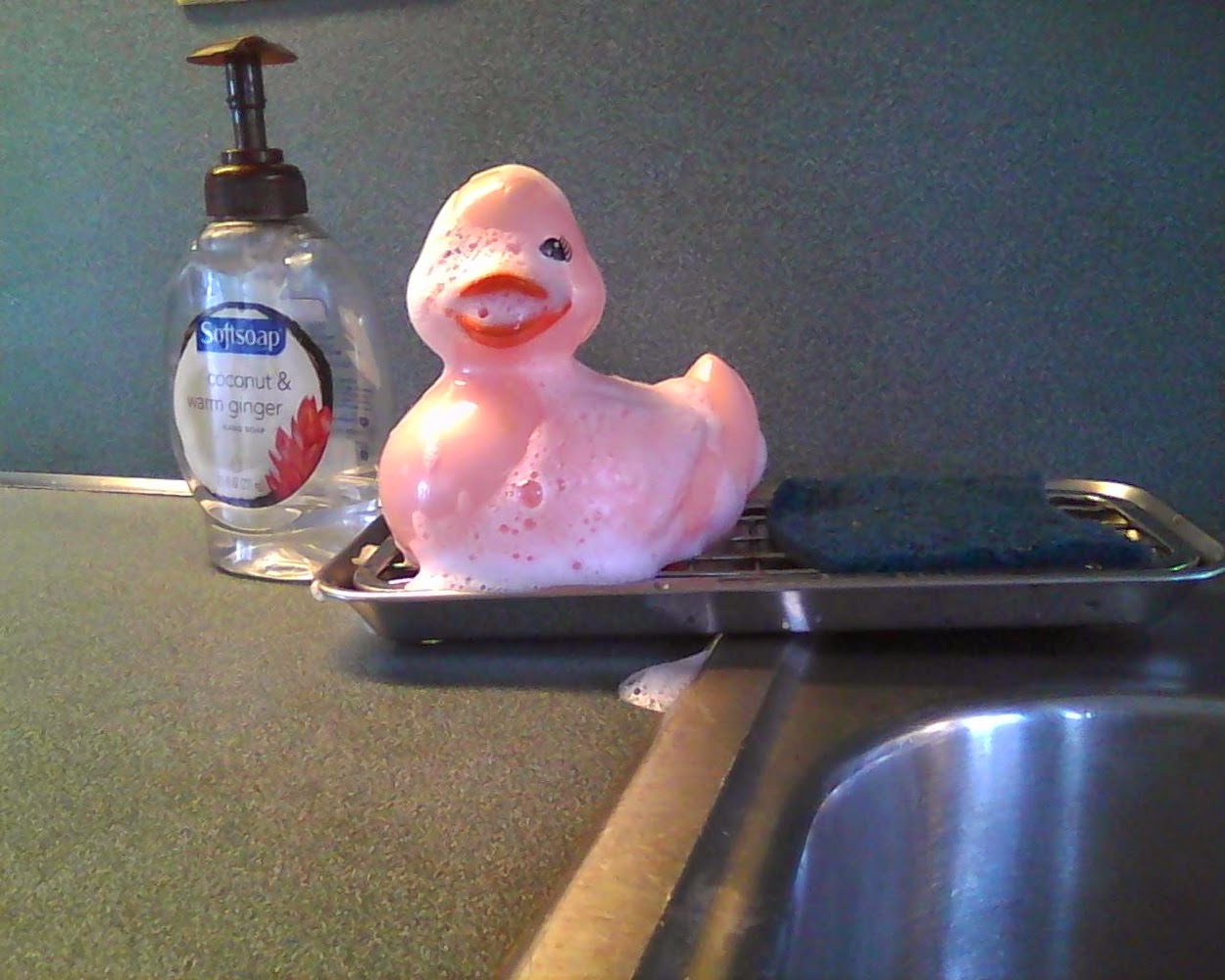
Get yourself a rubber ducky and put it on the sink as a friendly reminder. Train yourself to think “Sink!” and you’ll have a better shot at keeping you AND your loved one healthier this winter!


For free caregiver education, visit The Practical Caregiver Guides -- help someone you love!

Monday, July 7, 2014

Silence Is Not Golden When a Friend's Cancer Returns

Is there anything sadder than hearing that someone's cancer has returned? Yes. It's hearing that family and friends pulled away at a time when support for someone you care about is most critical.

A young woman -- delightful, sweet, with the infectious optimism of Pollyanna in an adult body, recently announced her cancer is back, bigger and meaner than ever. She's someone who has celebrated milestones, shared her thoughts and feelings on a number of subjects, and encouraged everyone to make the world a better place to be. There's not a mean bone in her body, but there is cancer.

My first thought on hearing the news was, "^%$#@! This is so unfair!" After all, she has young kids who need her. She has a husband and a history of overcoming obstacles. She has family and friends who adore her. She has so many interrupted hopes and dreams she put on hold while tackling this disease. Now what happens?

Throughout the July 4th weekend, her plight stayed on my mind. Why? Because I wished I had the power to do something positive to make a difference in her life. Too many good people are swept up in the cancer struggle; it saddens me when the journey goes from uphill to downhill in the blink of an eye.

It means shifting gears for me, emotionally and physically. It means I must accept that whatever course her cancer takes. I will figure out a way to let her know she matters, even when I feel awkward and uncomfortable, even when my words seem inadequate.

But more importantly, her news reminded me of my mother's struggle -- not so much over the disease and treatment, but the reactions of people she thought cared about her. She found out the hard way that all her efforts over the years to support friends and family didn't amount to a hill of beans when she most needed a kind word, a cheerful thought, or even just a friendly shoulder to cry on.

Was it because people didn't care? I don't think so. I think it's because we have this reluctance as human beings to admit we are uncomfortable when someone is experiencing serious illness. We want to play ostrich and bury our heads in the sand until the moment, or the person, passes. But that's all about us, isn't it? It's about making ourselves feel, or not feel, for someone we care about.

Real support for cancer patients means accepting that things don't always go well during cancer management. Years ago, when I worked with hospitalized children, I often saw the same faces come through the doors of the pediatric ward over and over again. Back then, it was normal for kids with most kinds of cancer to die within months -- there was no time for hope to blossom, nor a cure to magically appear. It was what it was for decades, until slowly and surely, doctors began to understand the complexity of the different types of cancer and learned to impact its control on the body.

Nowadays, more people manage their disease over time. The years go on while the cancer remains in remission or occasionally pop up, only to be knocked down again by this new treatment or that one. People get back to living their lives, until the day that horrible blow fells them once more and the prognosis is not optimistic. It can feel like failure when cancer comes back. It means there is something we have little control over in our lives, a beast that can ruin everything.

Maybe that fear of feeling helpless is what drives many of us to stay silent, to ignore the bad news, to pull away. Maybe we fear being emotionally overwhelmed by the reality that someone we love is in dire need and we don't have the tools to rebuild that lovely, lovely life.

Maybe we need to accept that this isn't about us at all. It's about someone who matters. What does she need from us that we can give?

Even if we can't make someone better, we can make her feel better. My mother was lonely after many of her friends, and even some relatives, pulled away from her. She did, however, receive glorious support from very loyal people. There were phone calls just to say hi, to let my mother talk about what mattered to her. There were notes to say, "Remember that time we went...." There were photographs that arrived in the mail, potted plants that were delivered to the door, and even people who just volunteered to sit with my mother. The brave ones in her circle reached out and made the effort, not because they were brave, but because they put her needs ahead of their own need for comfort. Letting go of our own fears and emotional pain is the way to become brave. We're too busy thinking about someone else's needs to think about our own desire to protect our hearts from sorrow.

We can't make someone better, but we can always figure out a way to make her feel better. Sometimes it's just knowing that she matters to us as a human being. We are still aware, and grateful, she's with us. We are still remembering the way she made us think about this or laugh about that. We want the best for her because she's been a ray of sunshine on a drizzly day. It's really all about her.

Personal power isn't about fixing people. Personal power isn't something we wield like a sword and then we move on to the next triumph. It's about connecting with the human heart and saying, "I feel small because I can't do much, but I want you to know I care."

The real power we hold as human beings isn't in the ability to slay dragons. It is in the ability to love, whether it's our immediate families or our extended circles. We love and that is the unification of the human experience, the coming together of the community in a positive way. We should celebrate our ability to care, even when our hearts are breaking for someone we love. We should take that step and reach out that hand. No one with cancer should ever look to us and find us hiding in the darkness, running away because we're scared. Hearts are far more resilient than we know, but only when they are filled with love, hope, faith, and charity.

Garth Brooks sang a lovely song that succinctly sums up my feelings about embracing life:

"And now I'm glad I didn't know
The way it all would end, the way it all would go
Our lives are better left to chance
I could have missed the pain
But I'd have had to miss the dance...."

From "The Dance" by Tony Arata

Friday, June 20, 2014

What Does a Cancer Diagnosis Feel Like?

I have a very special post to share with cancer patients and their loved ones. The raw emotions and roller coaster ride of a newly diagnosed cancer patient is rarely demonstrated as well as it is here.

I opened an email from a hospice friend not long ago, someone I hadn't corresponded with in a while, and got the shock of my life. But it was nothing compared to what she was going through.

Long after I read her letter, her words stayed with me. I couldn't shake them. My first thought was to contact her and tell her how much she is in my thoughts, my prayers. But my second? I wanted to give her a chance to share her story, not only to give her a voice as a cancer patient, but also because I believe other people out there will benefit from her experience.

Before you read on, let me tell you that I have already heard further from her. Melody Webster's sense of humor and determination to rise above are still strong. I asked her if she would consider checking back in, during treatment and after. She is very interested in doing that, so expect to hear from her again on my blog. And now, here is what she wrote:

I Have to Get This Off My Chest -- Letter from Melody Webster

I found it necessary to write this so that years from now I could recall how I felt when I was faced with hearing I could have a very serious illness. I have worked in Hospice for some time now and meet many families that are faced with the reality of having a life threatening disease. Always thinking I knew how they were feeling and what they were going through couldnʼt have been any further from the truth. I am lucky, I only had to prepare to hear the worst, these families are living the reality of knowing their final outcome.

My heart goes out to all of them........

We see our bodies every day. We notice every new line and wrinkle on our faces as we brush our teeth and put our makeup on. We see more and more grey hair as some of us try to hide them with color. We see the little new dimple of fat that may appears on our thighs. We touch the little pouch of stomach that may have appeared on our tummies. Some of us pull the falling face up towards our ears and think wow I could looks 10 years younger by having a little tuck behind my ears. We brush our teeth with whitening hoping to have the great smile we did when we went to the prom. We wear push up bras or athletic bras hoping to get a little perkiness in our girls.

Have you looked at your boobies lately? Do they look the same as they always did? My boobies started to look different over a year or so ago. Both my nipples were smashed in when I took my supportive bras off at the end of the day. I encouraged them to come out by pulling and twisting them. My thought was they were just a little tired of the effort to look young and smug. I thought that like everything else on my body they were loosing their elasticity and just wanted to take a break. No more having to put my arms in front of my chest when picking up a pizza in the frozen food section. Those little nipples kept themselves warm and snug by taking shelter in the comfort of my now bouncy, drooping boobs. I succumbed to the fact that my body wasn't what it used to be and some things cannot be changed without a huge bankroll given to a plastic surgeon. I decided then that I loved my husband; he loved me no matter what I look like as long as I always applied a little lipstick before we went to the store together.

I paid attention to my yearly blood work that always came back good, not perfect but "great for a woman of my age". I kept up with my yearly mammograms. Asked the tech if she had seen many women with a shy nipple and she assured me she has seen many. Believed it was again just a normal sign of AGING. I forgot to mention that my nipples were like tortoises. One always finally came out of its shell the other one remained hiding inside refusing to come out even when coaxed by manipulations Iʼm not going to mention.. The refusal of this stubborn nipple caused me a lot of anguish. I thought I had more control over my body parts, maybe not my bladder but other parts.

I spent many hours on the Internet searching for shy nipple syndrome. Everything that came up was very frightening....REALLY! Everything from Inflammatory Breast Disease, all sorts of other breast cancers, the list went on and on. Nipples that had never shown their smiley faces were ok but ones that started hiding later in life were a REAL warning sign that something isn't right. I became obsessed with this nipple. I asked practically everyone I didn't know if they had one. I was too embarrassed to ask people I know about my shy nipple for fear they would think I'm crazy.

Finally it got to the point that after every search on the internet I would clear my browsing history.... didnʼt want anyone to know that I was obsessed by this, especially since everyone was telling me that this was perfectly normal.

One day I told myself there is more to life than worrying about a shy nipple.....take action and resolve it now! Get the answers to all the questions so you can return to a normal life. I even considered having this nipple decorated with some sort of nipple ring to keep it out in the open.

I finally decided to take the bull by the horns or in this case take the nipple by the very small tip showing and demand someone explore fully why this baby wouldn't stay out. I made an appointment with my primary care doctor. She looked at all my past mammograms and confirmed that they were all negative. Upon her doing a breast exam she notice that the breast with the shy nipple felt really dense and it was hard for her to determine if there were any significant lumps or abnormalities. She said since I had been worrying about this nipple thing it may be appropriate to have an MRI. Great I'm making progress even at the embarrassment of shy nipple. MRI scheduled....in a couple of days I would have some answers. Yeah!

Got a call from my doctor a few days after the MRI telling me they saw a couple of masses in my shy nipple breast along with an enlarged lymph node. Recommendation was to have a biopsy. Wow -- reality hitting me.

Was I right all along that something very serious was going on and that my shy nipple was trying to catch the attention of everyone and no one way listening to the cry of help from this little precious piece of skin? Concerned about what this all meant I asked my doctor what the heck does this suggest. Her response was expect to hear the “C” word. Yikes is this really what I wanted to find out? Maybe I should go hide with my shy nipple. She went on to tell me that it was probably stage 3 cancer and that surgery, radiation and chemo were to be expected. "NO! ARE YOU KIDDING ME?" I thought. I asked her what about my shy nipple?

She said the nipple wasn't involved as shown by the MRI.

She would set up the appointment with a breast surgeon so that it would save time. It would be right after the biopsies. I was really worried that maybe I had waited too long. Was I beyond early stage curable cancer? Had it spread to other areas? Was I so keyed into my vanity? Had I pulled the face skin back to my ears too many times to look ten years younger when I should have paid more attention to my shy nipple waving her arms as if saying throw me a life jacket I need help and I need it now! So many thoughts and not enough hours in the day to filter all the information.

I lost a couple of lbs over the past month or two in hopes of wearing a new bathing suite to the pool with my grandchildren this summer. OMG maybe I need those lbs. now because of all the surgery and treatment I'm going to have. My head is swirling. Iʼm too young for this. I need to take an Ativan to make it through the day and wine and Ativan to sleep only a few hours at night.

How will I make it over the next few days before the biopsy? My head is swimming with negativism. Everyone says to be positive for a good outcome. Positive.... Iʼm ready to pay the funeral director now in fear that I will spend our entire retirement fund at the casino to blot all this out. God please help me make it to the biopsy without having a heart attract or stroke...........

As many women before me have done I made it to the biopsy with fear in my heart and a sick feeling in my stomach. Its funny what fear can do to the body. All “systems go” if you know what I mean. When I woke up on the morning of the biopsy I felt pretty good. The couple glasses of wine and the melatonin before bed brought the rest I yearned for before my big day. I was fine till I walked through the door of the building that would inflict long needles in my breast. I squirmed just plucking one little hair I had noticed growing from my nipple in the past. Now several needles would be inserted deep and they told me I could even watch the whole procedure on the screen. Wow are you kidding me. I still remember the scene from Psycho in the shower. I never thought I would want to look at sharp objects going into a body again especially mine.

Well as it turns out there was very little discomfort from the needle that deadens the feeling in the breast but I thought since menopause I havenʼt had much feeling in that area anyway. Everyone at the cancer center was great. They must pay them a lot of money to create such a calm and peaceful setting. It was like a dream where you didnʼt want to wake up because everything and everybody was treating you so kind and so nurturing. I realized how selfish I was to think that I was the only one ever experiencing this. Itʼs not all about me I thought I am one of millions of women who have gone through this.

P.S. Infused some humor because that is how I handle life stresses.

Going home I felt numb not just in my boob but my whole body was in a state of shock. Things like this only happen to others. Then my mind starts thinking about all the families Iʼve met through hospice and I have just about given up hope for cure before the results even came back. At this point Iʼm just tired of ME. I think I went through all the stages of grief in the period of 2 weeks. I had to wait from Thursday till the next Tuesday to find out the results. Was it a piece of cake….not really it was several pieces of cake and a keg. My darling husband must have sent out an SOS to our relatives because my daughter-in-law and oldest granddaughter drove from Calif. to Sahuarita to spend Easter with us. Leaving the 3 other grandchildren and husband home alone on Easter. Wow did I feel the guilt. I was on my best behavior keeping all of my feelings to myself. Only by then there were hardly any feelings left.

I feel the guilt. I was on my best behavior keeping all of my feelings to myself. Only by then there were hardly any feelings left.

Then came the day of reckoning … like the jury had reached a decision and I was awaiting my sentence. I was totally amazed at how hearing that I did have a cancerous mass but it was slow growing and I would receive hormone treatment to shrink it before hopefully only a lumpectomy could raise my spirits.

All the prayers that friends said for me had been answered. I was afraid that God no longer listened to my prayers since I have used all of mine up at the casino praying for a royal flush.

Smack me in the face -- I have had to come face to face with my mortality and it was a scary thing to do. I send my most deepest respect and admiration to those who have had to go through what I have experienced and did a much more honorable job of doing it than I did.

God bless all you women who have fought the cancer battle. I canʼt say Iʼve walked in your shoes -- maybe just in your flip flops.


Love to all for your support.

That's it for Melody's letter. She's begun treatment and is on her way as a cancer survivor. I'm looking forward to hearing about her progress, and when she shares her thoughts on the road to recovery, I will post them here. And again, Melody, thank you for having the courage and gumption to speak up, to speak out, and to share your experience. We're grateful.

Saturday, May 31, 2014

Don't Give Cancer the Power to Stop the Family Reunion

It started some eighty years ago at the shore. A family got together for summer fun when they rented a cottage. Over time, the parents built a home with a big backyard, where everyone gathered. Children grew up. Some married and had kids of their own, and eventually even grandkids. Some didn't. Some changed jobs and moved around. Some kept the same jobs over the years and put down roots. Summers drew everyone back together for cookouts in the backyard at the fireplace built by cousins, stone by stone.

My earliest memories of my grandparents, aunts, uncles, and cousins are all there. To this day, that scent of raspberry, mingled with confectioner's sugar on powdered jelly donuts evokes the heartfelt warmth of happy family gatherings, thanks to the uncle who used to bring a brown box from the bakery every time he joined us on a summer weekend. There were group walks to the point, ice cream cones with sprinkles, lots of laughter, and relatives galore. This was the one place we all saw each other, our common ground in a rapidly changing world.

In later years, as the original cousins got on with their lives and people moved again and again, we no longer saw each other regularly. That all changed when Uncle James turned 75. His family planned a big birthday bash and invited everyone to come. What a wonderful day that was. There might have been a little sprinkle or two of rain, but I remember pine trees and people, and above all else, laughter.

The following year, my mother suggested we all gather again, this time at my parents' home, for a reunion. This became the annual family gathering. For more than thirty years, the relatives have come to swap stories and share food.

When my mother had a heart attack several years ago, it was a shock. Despite all the previous visits to the pulmonologist for treatment of the increasing breathing difficulties, no actual diagnosis was made. That nagging shadow on her scan that signaled there was something ugly growing on the horizon, but what was it? That something was lung cancer, thanks to that genetic glitch that seems to run in the family.

My mother was devastated that over the course of several years, her cancer grew unchecked. As is the case with many cancer patients in similar straits, she was angry that it wasn't discovered until it was inoperable. Chemotherapy, radiation, and supplemental oxygen extended her life. And with that time, she was determined to continue the tradition of the family reunion.

By then, I was my mother's full-time caregiver, while my father continued to work. I took her to and from her medical appointments, coordinated her medications and therapies, and most of all, took on the task of helping her to live as full a life as was possible under the circumstances.

One of her most adamant wishes was that the family reunion continue. It was no small task. In a normal year, it takes me approximately forty hours over a month or so to get everything ready for the relatives -- the equivalent of a full work week. As a caregiver, I had to squeeze those hours into my already challenging schedule, one that included constant trips to the hospital and medical emergencies. My mother insisted on knowing every detail of the reunion plan, determined to be involved with every decision that needed to be made, from the RSVP tally to the number of hamburgers and hot dogs we would need to feed the crowd to the coffee we would serve with dessert. She insisted on hanging onto the shopping cart and perusing the aisles of stores to gather items for the party, even as her energy flagged and her oxygen tank needed changing.

Some caregivers might have insisted on taking over, pushing the cancer patient aside, in order to get the job done quickly and efficiently. After all, when you are already caring full-time for a loved one, there's little time for anything else. But it's important to understand the devastating impact of cancer on "normal life". Those chores, errands, and tasks most of us hate can sometimes be the perfect therapy for cancer patients who are terrified of what is to come. That great uncertainty that comes with a cancer diagnosis is hard for the mind to overcome; the more a cancer patient is able to stay in the game, the better.

For my mother, it was important to let her still be in charge, even through the fog of cancer treatment. After all, she and my father had invited the family to gather in their yard for more than twenty years at that point. It was their "baby", their way of celebrating the extended family. The big question was how to make that happen even during cancer treatment.

I once had a profound conversation with a cancer friend/survivor/advocate that brought that point home to me. She said her siblings began to count her out of family discussions about the future because they didn't believe she had one. Imagine how that makes a cancer patient undergoing treatment feel. It's like the kiss of death. You're already assuming the fat lady has sung her last aria. (By the way, that very same cancer friend/survivor/advocate is still going strong, still smart, and still more than ready to set the record straight. I'm so glad I know her.)

Another very valuable lesson I learned from my mother was that even the simple act of making decisions about the reunion kept her feeling positive that she still had something to give to the world. She could still bring people together to celebrate what matters in life -- the family. For someone whose health is precarious, the sense of weakness and helplessness can be offset by positive successes. For my mother, the reunion proved to be an achievement of which she was proud, a joint effort with my father.

Just pause for a moment and think about this. She was in active cancer treatment. She was easily fatigued and vulnerable to hideous side effects. Most people would think that the best course of action would be to avoid the stress of the reunion, to pull the drapes and shut the door. After all, it's too much for a cancer patient to handle, isn't it?

To this day, I still remember my mother sitting on the patio, watching the reunion tent go up. She wore one of the many chemo caps I made for her, her oxygen tank at her side, and in those moments, she was delighted by what she saw. Tables and chairs came out of the barn and went under the big top. Tablecloths were spread out and paper plates, cups, and plastic forks, spoons, and knives were set down. My father made his usual run to the ice house for huge blocks of ice for the soda, beer, and meat coolers.

Chemotherapy can be a real beast, but my mother worked with her oncologist to make sure that her treatment allowed her to be as functional as possible. They scheduled her medication so that she would be at her best on the day the extended family arrived. Unfortunately, she was laid low with a sudden bout of intestinal upset that first year with lung cancer. Much of the day was spent in bed. I checked on her frequently as the guests mingled outside. Far from being distraught, my mother was surprisingly calm and content. Even as she felt "crummy" physically, she was happy that she managed to make one more reunion happen. To her, that was her crowning achievement, something she shared with my father. In this day and age of separate lives, they brought us all together for a day, to remember our roots.

On that second reunion after her lung cancer diagnosis, my mother was feeling much better. I still can see her sitting on the patio, with people gathered around her. Still tethered to her oxygen tank, she had a ball catching up with everyone. Despite the fact that she couldn't walk far, the constant stream of people coming and going, pulling up a chair, put her right back in the action. For that moment, cancer took a back seat. Mama was once again in charge of her own life and there was much laughter.

We occasionally forget over time what family means to us. We stop discovering and rediscovering ourselves and each other. We presume to know what other people are thinking and feeling and don't bother to ask. Family reunions are an opportunity to connect and reconnect with relatives we may only see once a year. For that one day, when we take advantage of the moments, we can recall those who are no longer with us, not by forgetting, but by remembering. We can watch children grow into adults. We can put aside opposing politics and philosophies to find what we have in common. On that one day, we're all people united by the generations that came before us.

Even now, my father still looks forward to bringing the family together for that one day a year. He still spends hours tending to the yard and the pool in anticipation of the relatives' arrival. He doesn't do it to be a super star. He does it because he remembers what he got out of those days with his own parents, siblings, and cousins at the shore so long ago. He does it because he remembers those people no longer with us. It's his way of preserving family.

Someone recently suggested we end the tradition. Thirty years is long enough. It's time to move on. Not all of us feel that way. There are still those among us who want to honor that legacy my mother and father gave to us, the chance to get together for one day out of the year and remember we are connected. Time passes. People pass. But one thing we should never lose sight of is the power of family. Don't let cancer steal that from you and your loved ones. Work around the obstacles and come together, with hearts that seek laughter and love. While the storm clouds accumulate on the horizon, gather under the canopy of the family tent and celebrate what is here and now, because the memories you form today are the treasures you keep in your heart tomorrow, come what may.

Saturday, February 22, 2014

Why Is Cancer Always the Drama Queen?

It's probably happened to you ten or twenty times over the last decade. You've entered the realm of fictional cancer and cancer survival through media. You've witnessed the hero or heroine battling cancer from your perch in the fictional trenches. It's on the big screen in your local movie theater. It's in the TV special that has you glued to your sofa. It's in that bestseller you bought at the bookstore. It's in that short story in your favorite magazine. By the time you finish living through the cancer experience vicariously with the main character, you're emotionally exhausted.

But here are two questions for you. Why do fictional cancer tales always seem to stick with the same script? And why is cancer always the star of the show?

Oh, I understand all about the perils of cancer management. And you won't ever find me dismissing the cancer experience as "minor" or "a blip on the radar". But why do we always seem to put cancer up on a pedestal in fiction, whether it's movies, TV, books, or short stories? Does the plot always have to be about the disease? Frankly, I'm far more interested in the people, real and fictional, who survive the experience.

Some of the funniest, sweetest, feistiest, smartest, most compassionate people I know in the real world of cancer survivors would make fabulous characters in amazing tales. It's not because they have cancer, but because of who they are as human beings.

These people have lives beyond their disease. They are lawyers who happen to be talented musicians, journalists who live to box, social media experts who love their dogs...mothers and fathers, sisters and brothers, friends and neighbors who nurture fellow cancer survivors with some amazing outreach programs, -- ordinary people who do some very ordinary things, even while they navigate cancer experiences as varied and as unique as they are.

If you were lucky enough to meet them, as I have been, the one thing you would not take away with you is the sense that life is a constant edge-of-your-seat drama. These are not hysterical, desperate people living terror-filled lives. Sure, it happens sometimes that things go wrong and inevitably another beautiful soul loses the battle. But for the most part, the cancer survivors I know are not afraid to speak up, to speak out, to take charge of their world. They make the effort to infuse their lives with laughter and love.

How I wish we could capture that spirit, that wonderful sizzle of spunk that often drives so many of these cancer survivors to live their lives out loud. How many times have I heard them say, "(BLEEP) cancer! I'm going to do what I'm going to do despite it! I'm going for it!" And that's where the real stories of cancer can be found. Because so many choose to get around the obstacles cancer creates and achieve amazing things. So, why can't our fictional heroes do the same?

One of the saddest personal stories I ever read was from a real breast cancer patient, whose treatment totally disrupted her marriage to a man she thought would be there forever. Like watching a train wreck in slow motion, I followed her tale and thought, "If only this doofus had some idea of what to expect from his wife's cancer situation. If only he had heroes who had walked in his shoes and successfully managed to learn what to do and what not to do."

To me, movies, television, and stories are the perfect place for us to find inspiration on how to live with cancer, but if we only see the terrifying tales of gloom and doom, we become conditioned to expect cancer to be a death sentence, a downer, a disaster. The truth is that for every life destroyed by cancer, there are many more that were saved by treatments. Shouldn't our fictional characters share those experiences?

I was recently doing some research for a project I am working on as a mystery writer and I stumbled across something curious. Many of the writers who create cozy mysteries announce in their biographies that they are cancer survivors. Why is this? I have a theory. Cozy mysteries are all about people. We don't like lots of blood and gore in our stories. We don't like horrid characters who give us nightmares and do vicious things to our fellow human beings. In some ways, the cozy mystery genre is the perfect place to find comfort and happy endings for weary cancer survivors. Maybe that's what attracts writers and readers to the genre. We want to believe that life can be good. We need to believe it, because we will take that inspiration and use it in our own lives, when we or our loved ones are diagnosed with cancer.

But it's not only short stories and books that make a great platform for characters with cancer. Television and movies would be well served to utilize them. Why? Think about the people you know who have cancer. Think about the often profound changes they have experienced as they go through life after diagnosis. The truth is cancer changes everything. It's that unexpected wake-up call no one wants to get, and yet when it comes, it often seems to shake us up in ways that are often unpredictable and unexpected. It's not the cancer that makes people amazing. It's what they do in spite of the cancer.

As for interesting characters, I can attest to the fact that many of the cancer survivors I have had the pleasure of meeting are inspirational and memorable. If you can keep your sense of humor after a cancer diagnosis, if you can maintain a sense of hope in the face of such terrifying news, if you can carry on despite the uncertainty of having too many lemons and not enough sugar to make lemonade, you're probably going to have some great throw-away lines for any script.

The truth is cancer survivors are people who learn to live with the disease. They learn to manage it over time, to know when it's time to get a "tune-up", and even to expect that it might return at some point down the road. But as more and more cancer survivors go through multiple bouts of the disease and live to tell about it, our fictional tales should reflect this fact.

My hope is that one day, authors, publishers, scriptwriters, producers, and directors will come to understand that cancer shouldn't always be the drama queen of a story. Sometimes cancer can be the fictional challenge that teaches a tenacious survivor how to get past even bigger obstacles. Or, better still, we can begin to treat cancer as the occasional footnote in our lives. For those whose cancer is caught quickly and wrestled to the ground, we might find fictional characters who use perspective and common sense to put cancer in its place.

Oddly enough, I think if William Shakespeare lived today, he would have done just that. Cancer would have been just one more challenge that his characters faced, some bravely, some cowardly, some with humor, but never without something interesting to share. I long for the day when cancer is not the lead player on the stage, but merely an act or two in a lengthy production:

All the world's a stage,
And all the men and women merely players:
They have their exits and their entrances;
And one man in his time plays many parts,
His acts being seven ages. At first, the infant,
Mewling and puking in the nurse's arms.
And then the whining school-boy, with his satchel
And shining morning face, creeping like snail
Unwillingly to school. And then the lover,
Sighing like furnace, with a woeful ballad
Made to his mistress' eyebrow. Then a soldier,
Full of strange oaths and bearded like the pard,
Jealous in honour, sudden and quick in quarrel,
Seeking the bubble reputation
Even in the cannon's mouth. And then the justice,
In fair round belly with good capon lined,
With eyes severe and beard of formal cut,
Full of wise saws and modern instances;
And so he plays his part. The sixth age shifts
Into the lean and slipper'd pantaloon,
With spectacles on nose and pouch on side,
His youthful hose, well saved, a world too wide
For his shrunk shank; and his big manly voice,
Turning again toward childish treble, pipes
And whistles in his sound. Last scene of all,
That ends this strange eventful history,
Is second childishness and mere oblivion,
Sans teeth, sans eyes, sans taste, sans everything.


From "As You Like It", monologue of Jaques, Act II, Scene VII

Friday, February 7, 2014

No Such Thing as a Good Kind of Cancer

Recently, there was great controversy stirred up by a UK pancreatic cancer charity, which launched a promotional campaign in which people spoke of wishing they had a different kind of cancer, because their outcome would be better. I was dismayed. Not only is this a misguided effort, it's downright dangerous. It leaves viewers with the idea that there is some "good cancer" out there, and that if one gets it, "no problem".

Such an unfortunate campaign sadly misinforms the public about the real face of cancer. In all my years, I've never known anyone to get a "good kind of cancer". Cancer is cancer -- a generic name for thousands of different kinds of biological reactions in the body that often attack organs and blood, creating tumors, autoimmune issues, and other maddening, life-changing, life-challenging issues.

In all my decades of life, I've seen so many things happen. People who had good prognoses died and people who had bad prognoses lived. You can't always predict how cancer will affect the body, and the idea that having a "good cancer" means you will survive is just wrong.

Don't believe me? Answer this question. Which vehicle would you prefer to be struck down in the street by at ninety miles an hour:

A. a 7-ton double-decker bus
B. a 2-ton Mercedes Benz
C. a  half-ton Fiat 500

Did you say the tiny, "cute" little Fiat? Did you perceive that because of its public aura, its marketing campaign, its ability to navigate through tight spots that you would be safer being struck by one? At ninety miles an hour, does it really matter what type of vehicle strikes you? I think not. Impact on the body is a critical factor in a traffic accident. The same is true of cancer's impact on the body. How much cancer is there? That's what helps to determine outcome. If doctors have to treat a body riddled with cancer, the chances of survival are about equal to being hit by any type of motor vehicle at ninety miles an hour.

Here's another question:

If you fell overboard without a life jacket, where would you have the best chance of surviving:

A. In the middle of the Atlantic Ocean
B. In the middle of Lake Superior
C. In the middle of the Amazon River

Three different bodies of water. Three different types of challenges and risks. You might think that the ocean is the most dangerous. After all, if there are sharks and other predators in the water, and the waves are rough, your survivability rate will be sharply curtailed. We know that the Amazon has piranhas, those nasty little fish that work themselves into a feeding frenzy, not to mention black caimans, those alligator relatives, and any number of other critters, so that's probably not a great option. If you said Lake Superior, did you consider things like the shipping traffic? Or the ongoing risk of hypothermia? Or the dangerous rip currents?

Whether you're about to be struck by a vehicle going ninety miles an hour or you're dropped into the middle of a huge body of treacherous water, the end result is the same. It probably won't end well.

The same is true for any advanced cancer. In this past two weeks, I have read the posts by friends who lamented the passing of this person and that person. They were all individuals with different kinds of cancer and they died.

I have also read wonderful things by people who survived their battles. Everywhere I go, in public, online, people share their stories with me. Never have I found that one kind of cancer is better than another when it comes to survivability. What matters is the stage, the treatment options, and the cancer patient's ability to sustain the effort. There are so many variables, so many ways things can go, no one is ever promised complete cure or extended life, except perhaps in Stage One, where it's easy to be optimistic.

Understanding the broad spectrum of diseases with the generic title of "cancer" is more complicated than most people appreciate. While the pancreatic cancer organization in the UK erred by their promotional campaign's suggestion that there are better kinds of cancers to have, I've seen people make the opposite mistake. I once had a conversation with a cancer caregiver who actually thought her husband's taking a pill once every couple of months was the same experience as my mother's being at the cancer center five days a week for months of treatment. It wasn't the difference between prostate cancer and lung cancer that was the problem. My mother was dying of the disease. She had no treatment options, other than to keep her comfortable. To have her cancer dismissed as the equivalent of an active man with managed prostate cancer fully engaged in life was hurtful. Four years after my mother's death, the same man is still going strong, still enjoying life. Do I begrudge him that time? Absolutely not. I'm glad he made it. I wish everyone did.

But I also wish his cancer caregiver understood the difference between a well-managed cancer and one that is out of control -- not through a failure by patient, caregiver or doctor, but because cancer is what it is. When it overtakes the body, options are fewer and the toll is much greater. We need to support cancer families in crisis with real action. We need to be there for them through thick and thin. These are the cancer patients who have the greatest hardships. These are the cancer caregivers who need a hand in providing care.

I wish everyone survived their bouts with cancer. That's really the bottom line. Many more do now than did forty years ago. Some people manage their cancers for a while, thanks to new treatments and better diagnoses. But there are still some people whose cancers are so aggressive, it's impossible for oncologists to do much other than try this or that. Cancer is still a mystery to figure out.

While it's tempting to attack with an "Occupy Cancer!" attitude, as if we can sit in and force cancer researchers to cure this type of cancer or that type, the fact is the developments in disease treatment are often made in unusual ways. Just recently, there was an announcement that doctors think a new acid bath for cancer cells might be an amazing weapon in the fight against cancer. Acid bath? It sounds so much better than a cancer drug that knocks patients on their fannies and sometimes even coldcocks them. In reality, it's not always the cancer that kills the patient. It's the rigors of the treatments, with the dangerous side effects. Many chemotherapy patients find their organs permanently damaged by the very treatments that keep them alive.

Getting hit by a Fiat going five miles an hour is probably a survivable event -- the impact on the body helps to determine the extent of the injuries. Getting hit by one going ninety miles an hour is probably not. Perspective is important when assessing cancer survivability, and the better able we are to see what is in front of us means we will act in good faith and to the best of our ability when meeting the cancer challenge.

Let's stop assuming that the happy face social media slaps on cancer is the real story. Let's stop thinking of the disease in terms of "good cancer" and "bad cancer". Let's stop thinking that some people are "lucky to have the good kind of cancer" and others are "unlucky". We need to join together in supporting every cancer patient, every cancer family, without the rancor or bitterness. Cancer is cancer. It doesn't care who you are or what you do or how much money you have in the bank. It doesn't care if you're a worthwhile person or the vilest of the vile. Cancer can't be dreamed up or wished away. It's a challenge that can only be met with a positive attitude, a realistic perspective, and a gritty determination to learn as much as we can to insure quality of life, not just quantity. Cancer is what it is, but life with cancer is what you make it. Choose wisely.

For more help as a cancer caregiver, visit The Practical Caregiver Guides

Friday, January 24, 2014

What Do Cancer Survivors and Diamonds Have in Common?

Diamonds...how do you make one? You bury carbon dioxide 100 miles inside the earth's core and then you heat it to 2,200 degrees Fahrenheit. It's all about high pressure and high heat. But a raw diamond isn't really all that amazing, is it? It becomes something special when it is transformed.

Raw diamonds do very little to let in the light. They are obtuse rocks, chunks of pressurized carbon that don't shine, glitter, or gleam.

Ordinary...common...plain.

The other day, I read a very touching obituary about a woman whose struggle with cancer began back in the 1970's...forty years ago...four decades of battling this disease...can you imagine the pressure she faced to live her life in spite of cancer? This isn't an undertaking for the faint of heart.

Cancer survivors live their lives under enormous pressure. They constantly rework the details of their lives around the disease, making the necessary accommodations that enable them to continue reaching their goals, even when they don't know if they'll reach them all.

It's a myth that diamonds are unbreakable. Sometimes it happens. A tiny fracture, one that might exist as the stone is forming, creates a vulnerability that puts the diamond at risk. Sometimes if it's struck at that vulnerability, it will crack, divide, or even chip. If the damage isn't great, it can often be repaired.

Sometimes people, like diamonds, can break. No one is invincible. But the human spirit that chooses to rise above turmoil, that seeks to endure the unimaginable, often finds there is opportunity in wise design. Knowing our own flaws helps us to figure out our strengths and use them to our advantage when we construct, and sometimes reconstruct, our lives with cancer.

The myth about cancer survivors is that they somehow achieve greatness because of their experience with the disease. People expect cancer survivors to be extraordinary beings, super heroes who do amazing things because they have the Big C. In reality, cancer patients are human. Who and what they are is decided, not by disease, but by self-determination and wise counsel.

Cancer survivors aren't all equal. Some are so overwhelmed by the rigors of cancer management that they lose themselves in the pain and uncertainty. Some stop living their lives. They lock themselves away and grieve for the time they won't have, rather than living the time they do.

And some, despite being overwhelmed, in pain, uncertain, rise above the limitations of disease and move forward, upward, onward. They don't do it because they have super powers, but because they gird themselves with courage they hope will hold them up. They are willing to take one little step more by drawing on their inner strength.

Most long-time cancer survivors can teach the world much about personal resolve, about what it's like to find yourself knocked all the way back to Square One when you least expect it. Fighting cancer isn't about sweating the skirmishes, but about surviving to fight another day. Seasoned veterans of the battle know that the first time you hear that diagnosis is horrible, and it never really gets easier to hear it again...and again...and again. But it sometimes happens. You do the best you can and you go on.

Some cancer survivors seem to thrive as human beings, and we often mistake this phenomena as a byproduct of the disease. Cancer didn't improve them. Sure, it pressured them, heated them until they were sure they could take no more, but they CHOSE to transform themselves.

It takes a jeweler to see the beauty inside a raw diamond, to chip away the cloudy bits, to cut away the flaws, until it is transformed. Every facet of a well-cut diamond allows in light, and where there is light, refracting on those hard surfaces of the diamond, there is sparkle. But it is the human hand and the human eye that finds the beauty in the raw stone and turns it into a gem.

Every cancer survivor has the power to transform. Choosing the kind of life you want to live WITH a cancer diagnosis allows you to take back your personal power. That mindset, that self-determination in the decision-making process, is what empowers us as people to take what we have and make the most of it. If we believe we can find opportunities even in crisis, we will seek them out. And when we recognize them, we will use them to our advantage.

When selecting a diamond, most jewelers advise paying attention to the four c's -- cut, clarity, color, and carat. A good raw stone will yield an attractive gem in the hands of an experienced diamond cutter. It's a matter of knowing what goes and what stays. The same is true for cancer management.

Long-time cancer survivors, honed by experience with the disease, often develop extraordinary clarity -- they come to recognize their vision of what life should be and they work towards making it happen, even when there are obstacles in their way. They add deliberate color to their lives by being selective of time, energy, and desire. Things that don't serve a purpose or nurture are cut away, until what's left is the beauty they've created in a life touched by cancer.

To become extraordinary as a cancer survivor, it's all about the four P's -- perseverance, personality, psyche, and passion. When you live mindfully, focused on what matters most to you as a human being, your determination makes you extraordinary, not cancer. Cancer is just the crisis that helped to form the rock. Without a master jeweler to cut and shape it, it is destined to remain just that...ordinary...common...plain.

You, cancer survivor, are the master jeweler, the artisan who will transform the ordinary into the extraordinary, the common into the remarkable, the plain into the magnificent. It doesn't happen in an instant. You must work at it. You must become skilled and knowledgeable about the disease, about how to survive it. The more you know, the better your decisions will be. Seek out those people who have managed their cancer through the years. Recognize the efforts they make to stay on top of their disease and to maintain their quality of life. Let them share their wisdom with you, so that you, too, can be extraordinary. Fate brings cancer into ordinary lives, but ordinary people choose their own destiny. You can, too.

Monday, January 6, 2014

Do Cancer Caregivers Have a Role in Medication Management?

My mother was a big believer in quality of life. It mattered to her that her life with cancer was meaningful. She didn't just want to exist. Knowing that helped me to be a better cancer caregiver. It enabled me to focus my efforts towards making her life as comfortable and active as possible.

I recently had a conversation with an elderly woman who wanted to share her discomfort with me. She wanted someone to know how difficult her life had become. In listening to her tale of woe, I was reminded once again that caregivers are often critical in making patients' lives better. Here's why. Her physician put her on a very powerful medication, one that my mother refused to take, and this elderly woman wanted someone to know that she hated it. I let her talk because she needed to "get it out of her system". She was clearly frustrated with her medical situation, but it was more than that. She felt had nowhere to turn for answers or options. When she told me that the doctors never listen to her, I cringed. The truth is that doctor-patient communication is absolutely critical in pain management. Without effective and honest conversation, there's no way a doctor is going to be able to solve a solvable problem. Doctors aren't mind readers.

Neuropathy was one of the most frustrating side effects of chemotherapy for my mother. But the pain medication she was prescribed for this condition turned out to be more debilitating than the "pins and needles". She felt like she was separated from her body and it "creeped her out". When a patient reports feeling that abnormal because of a drug, sometimes it's a drug interaction or reaction. The patient might need a lower dose or even a change. But if a patient doesn't report this to the prescriber, how will the situation get better?

As a cancer caregiver, it was my job to understand how well my mother was tolerating the treatments she was receiving and to figure out ways of helping her meet her needs better. Sometimes that meant making sure that the medical treatment team had the important information they needed to make the best decisions. But for many cancer patients, it's not always easy to share what's really going on. Doctors often are busy, with back-to-back appointments. Cancer patients with fatigue are already dragging their feet as they go through the day. A high-energy doctor and a low-energy patient aren't always a good combination. That's why a wise cancer caregiver may sometimes need to step in and prompt a patient to share what's really going on.

When you only have so much energy to get you through your day, when your thoughts are muddled by drugs, treatments, or even just the stress of having cancer, the path of least resistance can seem attractive. That means raising the white flag in defeat. Too many cancer patients turn away from the fight to get problems fixed.

This is why many cancer patients benefit from having cancer caregivers. We serve as support teams for our loved ones. We also serve as advocates. By accurately observing the symptoms our loved ones experience, and by putting these into logical context, we can often intercede to get the right help for our loved ones. We are sometimes the bridge between doctor and patient, and the better we can understand our loved ones' experiences, the more likely we are to help them get what they need.

Is it because our loved ones feel like the walking wounded? Is it because they fear that the discomfort they experience is symptomatic of new issues? Or is it just that they don't think there is any way to make a bad situation better? Sometimes cancer patients, especially those who have been in treatment for a long, long time, just kind of shrug off new problems with resignation. That's why cancer caregivers have to pay attention and guide their loved ones to effectively communicate with the medical team.

In my mother's case, the medication was just too strong for the amount of physical pain she had, and that meant that the medication, rather than relieving the symptoms, only made her feel "loopy" and not at all like herself. The solution was simple enough. She stopped that medication and went to something milder.

This wasn't the only time that my mother was prescribed a pain medication during cancer treatment that made her miserable. She once was given a pain patch that drove her bananas. Some patients really don't tolerate pain medications very well, and for them, the standard course isn't always the right course. A good palliative care specialist always takes that into consideration when making adjustments. That's the goal of pain management; to find the right balance between taking enough of the pain away to enable the patient to function at the highest level and making sure that the patient isn't overmedicated. But, as always, the level of medication can be adjusted only when the patient and caregiver are able to effectively share the information with the medical team.

The loss of hope can have a profound effect on doctor-patient communications, especially when your loved one assumes there are no more options. A wise cancer caregiver understands that it's not a matter of taking over and reporting to the physician on a patient's situation. But it's your duty to get real answers for real issues.

My mother was delighted to learn that things could indeed get better. Once she had the chance to see that the physician really did want to help her, she admitted she was having difficulty with medications. Mind you, there may be times when there aren't a lot of alternatives. And sometimes where your loved one is with the cancer can effect the medication. But you should always encourage the dialogue. because sometimes the "not knowing" is worse than the truth.

My philosophy of listening and guiding paid off for the elderly woman. She called me a few days later, wanting to ask me some more questions about my mother's experience with the drug she was taking. As she spoke, she acknowledged that her physician had previously prescribed a lower dose of the drug and she had felt much, much better. She couldn't remember why he had recently increased the dosage, but he had. And the more she thought about it, the more she wished she could go back to the way she felt when the dosage was lower.

But she had already ruled out talking to the doctor, to the physician assistant, and to the nurse practitioner (right there you know there's a significant communications breakdown.) What was left? The local pharmacist. Believe or not, sometimes the pharmacist who dispenses the medications can be a significant resource for caregivers and patients. Once I established the fact that she not only knew him and liked him, we discussed how approachable and personable he was. Could she feel comfortable asking him about the medication? Could she trust him to be straight with her on options?

The local pharmacist is often someone who can play a positive role in pain management, if for no other reason than he or she can be a fountain of information on side effects and ways to effectively manage these. Pharmacists can help patients and their caregivers navigate the issues without interfering in the patient-doctor relationship. If anything, a pharmacist can often help a patient understand better ways of communicating the real problems to the medical team. Is it because pharmacists aren't usually perceived as intimidating, short on time, or uninterested, or is it because they understand drugs and drug interactions? Who knows. What's important is that patients get what they need, and wise cancer caregivers know that any way you can make that happen, it's a positive step in the right direction.